

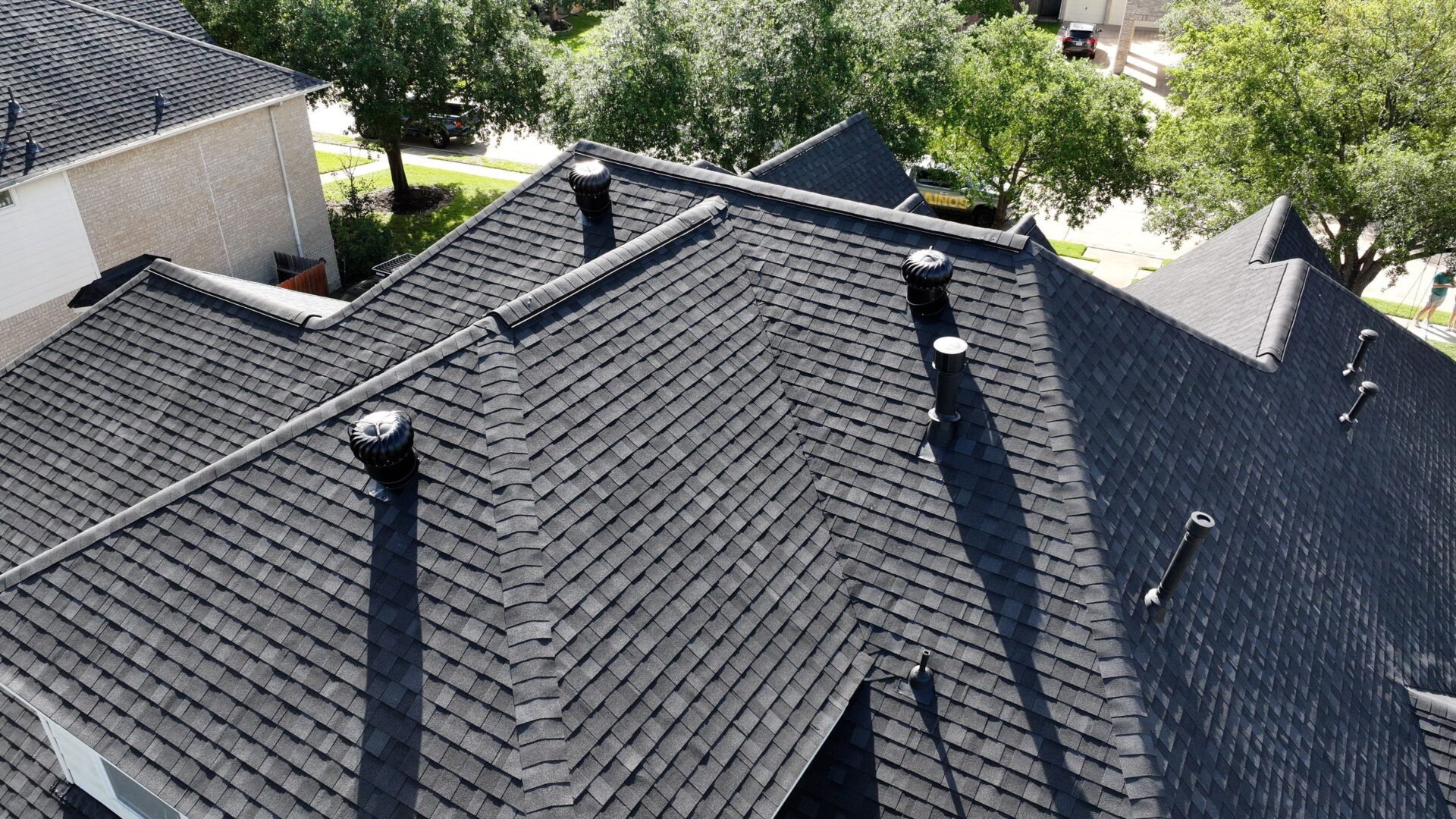
Is your roof working against you? If you have a hip roof with the wrong ventilation, the answer might be yes — and the consequences are more costly than you think.
That Roof Might Look Great. But Is It Breathing?
We see it every single day on the job — beautiful hip roofs with the wrong ventilation, and homeowners who have no idea there’s a serious problem hiding right above their heads.
The issue isn’t the roof itself. Hip roofs are attractive, durable, and incredibly common in our area. The issue is the ventilation — specifically, the wrong type installed on a roof style that simply can’t support it.
And it’s costing homeowners real money. Every single month.
First: What Kind of Roof Do You Have?
Here’s an easy way to tell.
Think of a church. That steep roof with the triangular flat ends — the point at the top runs the full length of the building. That’s a gable roof. Lots of ridge. Lots of ventilation potential.
Now think of a pyramid. All four sides slope upward and meet at a single shortened peak. That’s a hip roof. Beautiful, popular — and ventilated completely differently.
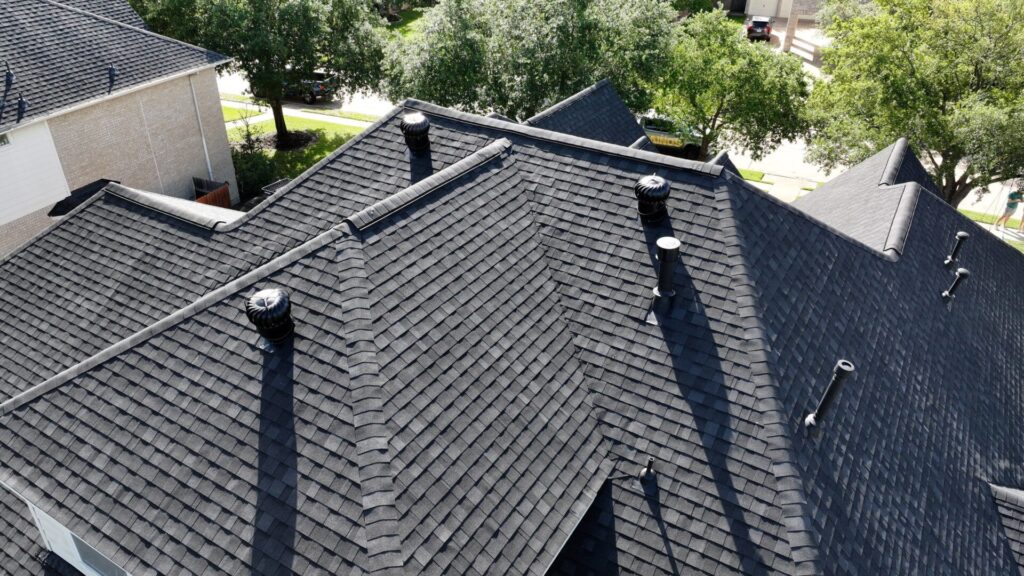
Look at your own roof from the street or from above. If all the sides are sloping and there’s no flat triangular end in sight, you’ve got a hip roof. And that changes everything about how your attic needs to breathe.
The Math Problem Nobody Talks About
Ridge vents work by allowing hot air to escape along the peak of the roof. The more ridge length you have, the more air you can move.
On a gable roof, the ridge runs the full length of the house — plenty of linear footage to do the job.
On a hip roof? That ridge is dramatically shortened. Because all four sides taper inward toward a center peak, the usable ridge on a hip roof is just a fraction of what you’d find on a comparable gable roof. There simply isn’t enough ridge to move the volume of air your attic needs.
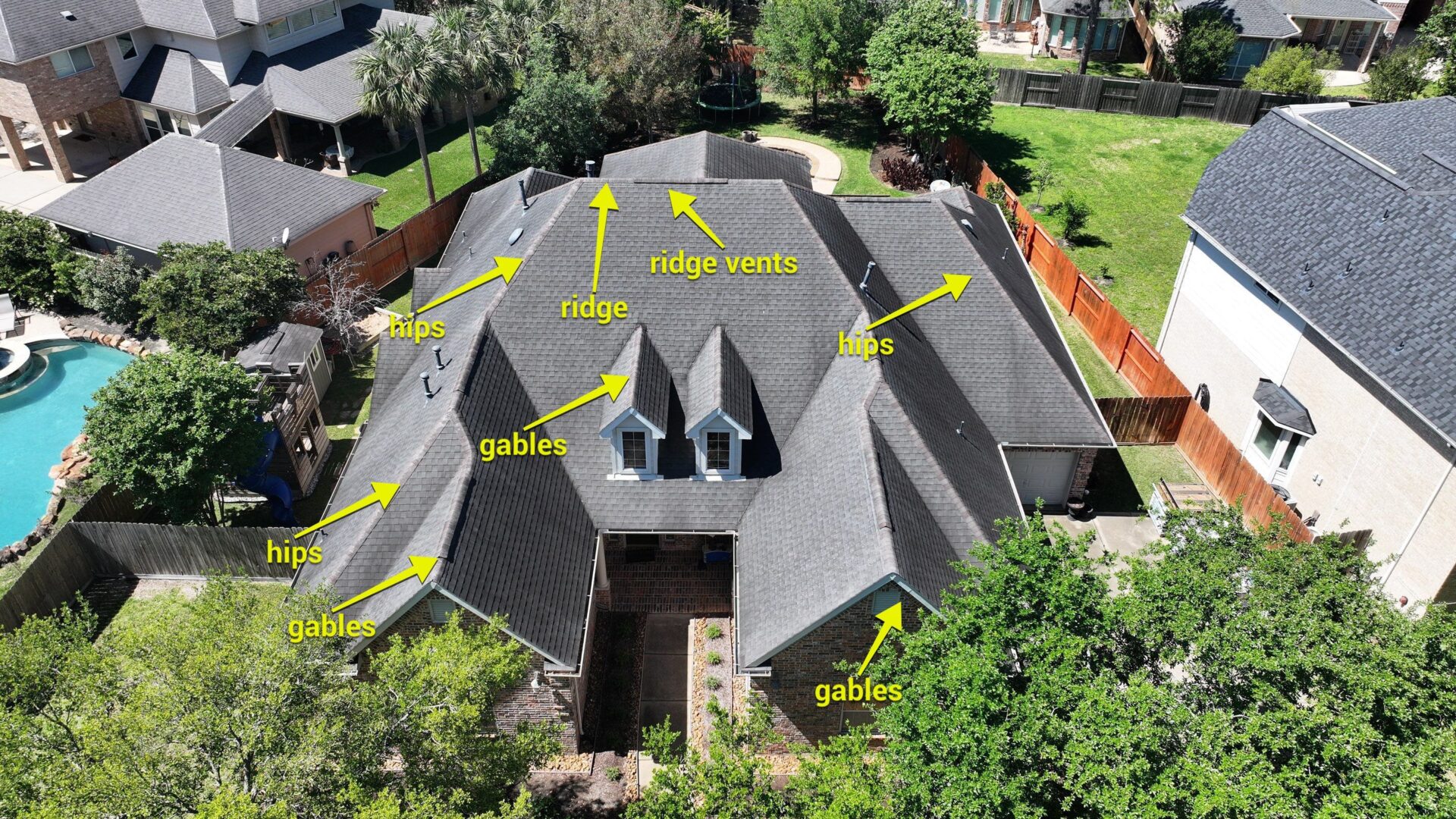
It’s a math problem. And math doesn’t care how good the installation looked.
A proper ventilation system requires balance — 50% exhaust and 50% intake. Without adequate exhaust ridge length, that equation is broken before it starts. One without the other simply does not work.
What Happens When Your Attic Can’t Breathe
In the summer, attic temperatures can soar to 140° or more. When you have a hip roof with inadequate ventilation, that heat has nowhere to go — and it starts working against everything in and around your home.
🔴 Your AC Works Itself to Death
That 140° attic is sitting directly above your living space. Your air conditioner is fighting against it every minute of every hot day. It runs longer, works harder, and wears out faster — all while driving up your electricity bill month after month.
🔴 Your Insulation Stops Working
Heat-saturated insulation loses its performance rating. You paid for R-38. You might be getting far less. That difference comes out of your wallet every billing cycle.
🔴 Your Shingle Warranty May Already Be Void
Here’s what most homeowners never know: all major shingle manufacturers void their warranties if shingles are installed over an improperly ventilated attic. Most manufacturers of paint, insulation, and windows say the same thing. Your warranties could be invalid right now — and you’d never find out until you tried to make a claim.
🔴 Paint Bubbles and Peels
Trapped moisture works its way down through your walls. If you’ve noticed paint bubbling, cracking, or peeling on your interior walls, poor attic ventilation may be the culprit.
🔴 Wood Rots. Mold Grows.
Moisture that gets trapped doesn’t just sit there. It creeps into framing, decking, and structural wood. It creates the conditions mold and mildew need to thrive — and the conditions that attract termites.
So What Actually Works on a Hip Roof?
The good news: hip roofs can be properly ventilated. You just need the right tools for the job.
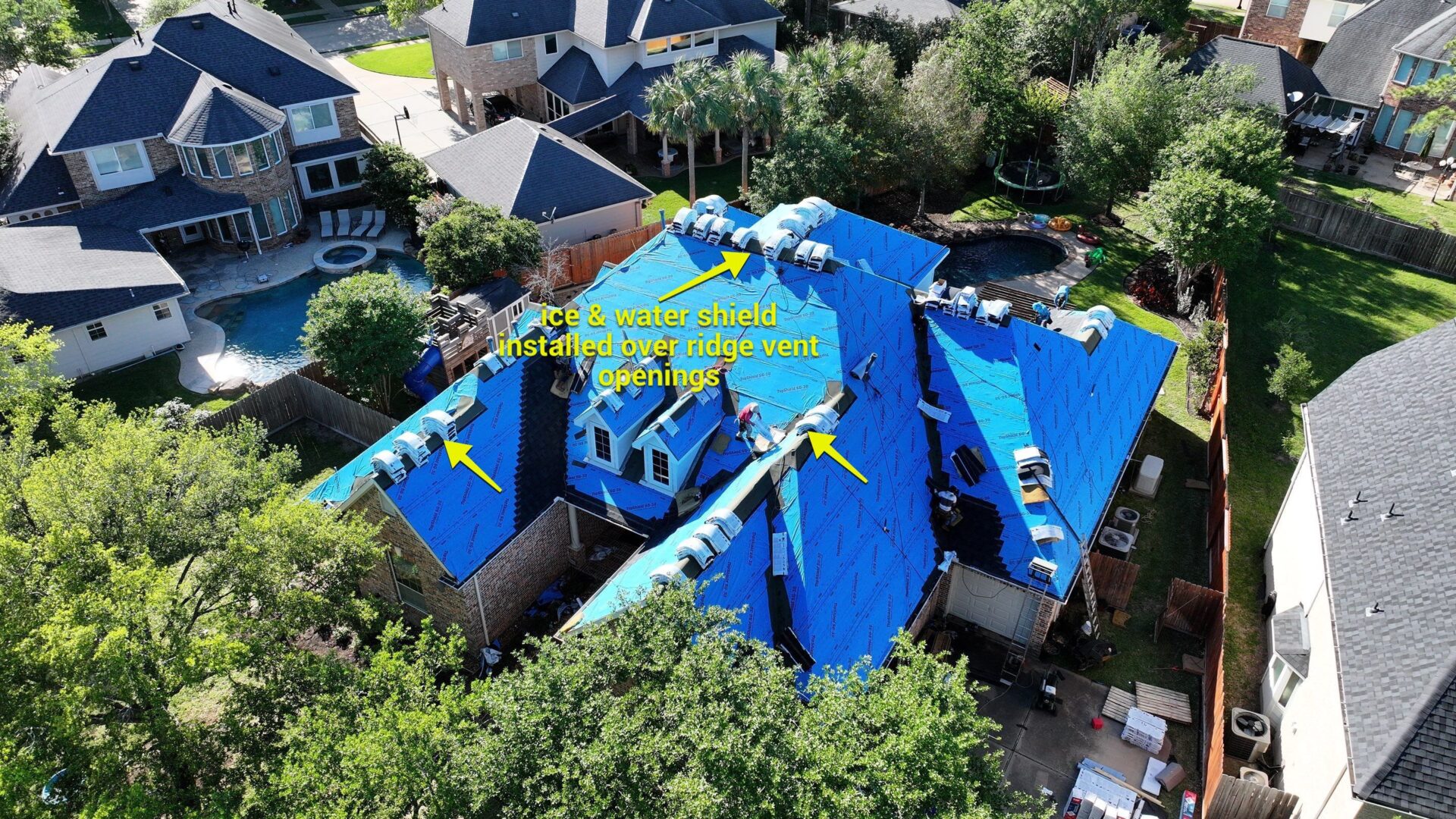
✅ Turbine Vents (Our #1 Recommendation)
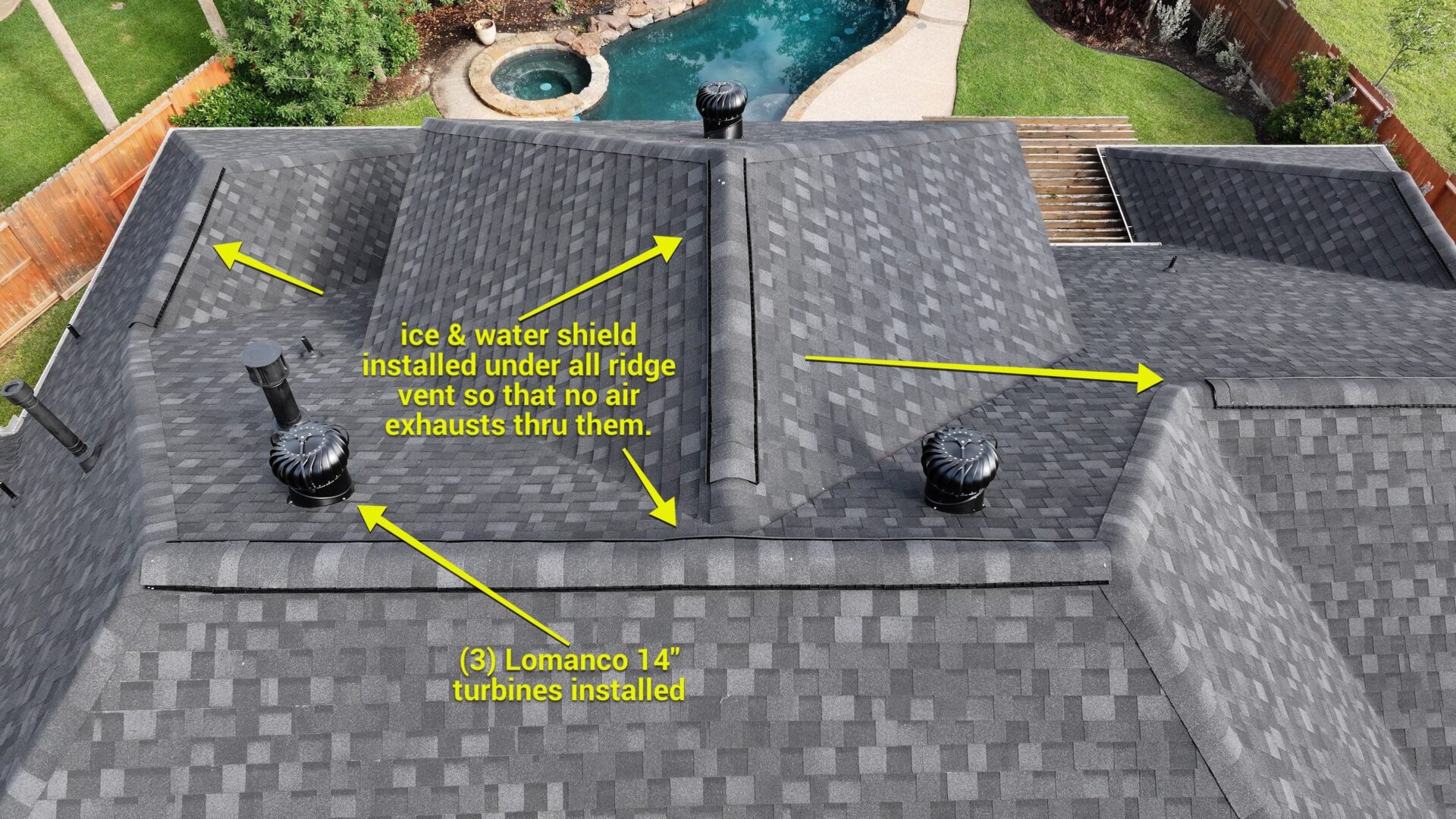
Turbine vents use even the slightest breeze to spin and actively pull hot air out of the attic. No electricity. No operating cost. On the Cypress job featured in this post, we installed Lomanco 14″ Whirlybird® turbine vents — and the quantity wasn’t guesswork. We calculated the number of vents needed based on the attic’s exact square footage. That’s the difference between a guess and a proper ventilation system.
✅ Solar Powered Fans
Solar attic fans run on free energy, operate automatically, and provide consistent powered ventilation without adding to your electricity bill. An excellent option for hip roofs with good sun exposure.
✅ Electric Powered Fans
Electric attic fans work — but they consume electricity, add to your monthly bills, and tend to have a shorter lifespan than solar or turbine options. Look for models with both a thermostat and humidistat so they only run when needed.
✅ Static Vents (As a Supplement Only)
Static roof vents can play a supporting role, but they shouldn’t carry the load alone. They move less air per square foot than turbine vents and rely entirely on natural convection.
❌ Ridge Vents on a Hip Roof
We know they look clean. We know they’re easy to install. But on a hip roof, there isn’t enough ridge. The math doesn’t work. And the consequences of getting this wrong are expensive.
One More Rule That Changes Everything
Here’s something even many contractors get wrong: you should only use one type of exhaust ventilation within a common attic space.
Exhaust vents pull air from the easiest available source. If you mix vent types — say, a ridge vent and turbine vents on the same roof — the upper vent pulls air from the lower exhaust vent instead of from your intake vents. You’ve short-circuited the entire system, and your attic still isn’t breathing.
Pick the right exhaust vent type for your roof. Install it consistently. Balance it with proper soffit intake ventilation. That’s how a system actually works.
Does Your Roof Look Like This?
Take a look at your roof. If it slopes on all four sides — if it looks more like a pyramid than a church — there’s a real chance your ventilation is falling short.
Ask yourself:
- Is your AC running constantly but struggling to keep up?
- Are your summer electricity bills higher than your neighbors’?
- Have you noticed peeling paint, musty smells, or unusually hot rooms upstairs?
- Do you actually know if your shingle warranty is still valid?
If any of those hit close to home, your ventilation may be the problem — and it’s a very fixable one.
We’ll Tell You Exactly What’s Going On — For Free
We offer free ventilation assessments. We’ll look at your roof type, your current vents, your attic square footage, and tell you exactly whether your home is properly protected — or quietly suffering.
The right ventilation isn’t just about comfort. It’s about protecting your investment, your warranties, and your home for the long haul.
Call us today or fill out the form below to schedule your free assessment. Because your hips don’t lie — and neither do we.
Ventilation product information provided in partnership with Lomanco Ventilation Products.
Leave a Reply